


The Work Will Continue
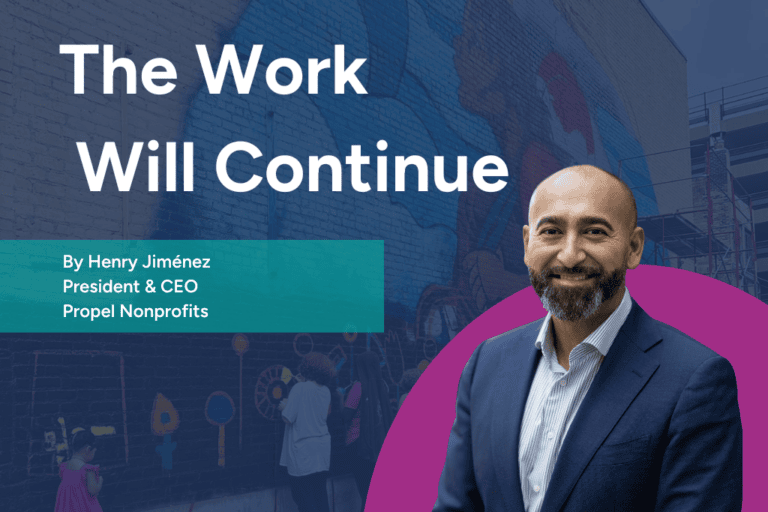
This year, our sector has faced challenges and scrutiny from some in power who recognize the strength of nonprofit leaders and our communities. Although our experiences as nonprofit leaders may vary, it is evident that many of us dedicated to advancing justice within our communities are weary. I know you are tired. I hear you say it almost every day, but I also hear you say something else: you are not giving up.
I am inspired by you. And because I am inspired by you, I want you to start prioritizing your well-being. I want you to start today, folks. As hard as it is to hear, especially in this moment, your well-being matters as much as the pursuit of justice. By caring for yourself, you honor those who came before us, and you create space to enjoy life fully, not just to work tirelessly for a mission.
It’s not always easy to explain the importance of self-care to those who depend on you, or even to yourself. For years, I misunderstood what it meant to take care of myself, thinking it was a privilege I couldn’t afford. Over the last few years, I have been working to prioritize my health and well-being. It has not always been easy, but with the support of my team and board I have begun to find a balance.
This has allowed me to be able to make timely and tough decisions as well as showing up as my best self, instead of someone that is always tired and exhausted. I want everyone to experience the same clarity and energy, and I want everyone to be able to show up as their best self. I am so grateful to you, and we’ll need you for a long time. Here’s a few ideas of where to start.
Four Ways Nonprofit Leaders Can Care for Themselves Today
1. Schedule Time Off for Yourself
Block off a long weekend or a week in the next month. The upcoming holidays don’t count! Taking a day or two and coming back to see the work has continued without me was how I began to realize I could trust those around me and share the work of our mission.
2. Trust Your Team
When you take time for yourself and your family, others will step up. If you are worried they won’t, practice asking for what you need to build this trust. This balance allows you to give your best to your work and your passion.
3. Consider Taking a Sabbatical
If your organization doesn’t have a sabbatical policy, advocate for one. I’m happy to share my experience with your Board to help make it happen.
Over the last few years, I was lucky enough to take sabbaticals as part of my Bush Fellowship. I felt guilty to be able to take this much time off when my parents and other colleagues who have worked longer have never had this opportunity. I don’t want my children or these colleagues to feel guilty, just because we haven’t made this a working norm.
4. Don’t Delay Important Decisions
The coming years may bring additional challenges, taking time now to plan ahead can make a meaningful difference. Even when things feel overwhelming, carving out space for thoughtful planning ultimately strengthens your ability to respond strategically and reduces stress in the long run.
Whether you’re mapping out different scenarios, communicating transitions, or preparing for shifts in funding, being proactive empowers you, the communities you serve, and your team to navigate uncertainty with greater confidence.
We Can Do This Together
We can’t start each year running on empty. It’s okay to start small: read for pleasure, mute notifications, take a nap or a walk. Make self-care a daily habit. The work will always be there, and so will we. But let’s be smarter, stronger, more resilient, and ready to make a lasting difference with you being a healthy part of it for the long term.
Staff Author

Henry Jiménez
Henry is the President & CEO of Propel Nonprofits. He is an advocate for nonprofits and individuals and works to build community and generational wealth across Minnesota. He serves on several local and national boards, such as COPAL, OFN, and NALCAB. He is also a 2023 Bush Fellow with a strong track record of impact. He lives in Richfield with his family.
Read BioStaff Author
Henry Jiménez
Henry is the President & CEO of Propel Nonprofits. He is an advocate for nonprofits and individuals and works to build community and generational wealth across Minnesota. He serves on several local and national boards, such as COPAL, OFN, and NALCAB. He is also a 2023 Bush Fellow with a strong track record of impact. He lives in Richfield with his family.
Read Bio